From Daniel Y. Dayee, Sunyani
THE Bono Regional Minister, Joseph Addae Akwaboa, has called on both local and international investors to take advantage of the region’s vast fertile agricultural lands and rich tourism potential to invest, add value to raw materials and create jobs.
He made the appeal at the Bono Regional Investment and Industrial Transformation Forum held in Sunyani yesterday under the auspices of the Ghana Investment Promotion Authority (GIPA).
The forum, which brought together manufacturers, agro-processors, poultry farmers, fruit processors, Municipal and District Chief Executives, planners and coordinating directors, was intended to showcase the investment potential of the region to domestic and foreign investors.
It was on the theme: “Driving Local Investment – Unlocking Regional Potential: Mapping Opportunities and Mobilizing Growth in the Bono Region.”
Addressing participants, Mr. Akwaboa commended GIPA for recognising the economic potential of the region and organising the forum to attract investors.
He said the initiative will help the region contribute meaningfully to the country’s industrialisation agenda and economic transformation.
Describing the Bono Region as Ghana’s agricultural powerhouse, the Minister said: “Our favourable climate, fertile agricultural lands and peaceful environment make it an attractive destination.”
He urged investors to take advantage of the abundant production of cashew, maize, cassava, yam, plantain, vegetables, citrus and other fruits.
“Opportunities exist in food processing, fruit juice production, starch manufacturing, edible oils, animal feed production, rice milling, flour production and large-scale warehousing,” he noted.
On livestock, he said opportunities abound in poultry production, cattle farming, piggery, fish farming, meat processing and dairy production.
He added that the region’s timber and forestry resources could be turned into wood processing, furniture and sustainable forest-based industries.
On tourism, Mr. Akwaboa mentioned the Duasidan Monkey Sanctuary, which is still underdeveloped, and the Bui National Park with its diverse wildlife and scenic landscapes, as offering great opportunities for eco-tourism investment.
He therefore tasked all assemblies in the region to identify, document and submit investment portfolios in their areas to GIPA for onward promotion to investors.
“Whether it is land availability for industrial development, agro-processing, tourism, renewable energy, manufacturing, commercial agriculture, housing, mining support services or logistics, every district must package this for GIPA to showcase to investors,” he instructed.
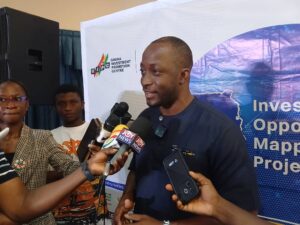
In an interview, the Deputy CEO of GIPA, Razak Baba, explained that the investment roadshow became necessary because out of $52 billion Foreign Direct Investment into the country, the Bono Region attracts only 0.1 percent.
“The region has a lot to offer, so we want to attract some of these investors to the region,” he said.
He cited the cashew sector as an example, noting that out of 80,000 metric tons produced annually in the region, about 90 percent is exported unprocessed.
“This is unacceptable. There is the need for a lot of value addition,” he stressed.
He maintained that investors need just about GH¢1.5 million to GH¢20 million to set up a processing factory and should take advantage of the opportunity.
Mr. Baba assured investors of attractive incentive packages, including a ten-year tax holiday after which investors pay only 15 percent corporate income tax, applicable to both Ghanaian and foreign companies.
The Chairman for the forum, the Omanhene of the Sunyani Traditional Area, Ogyeamansan Boahene Korkor II, called on Ghanaians to be disciplined in order to achieve national goals. He advised MMDCEs to collaborate with traditional councils to drive investment in their districts.